Kitchen Work Surfaces 1
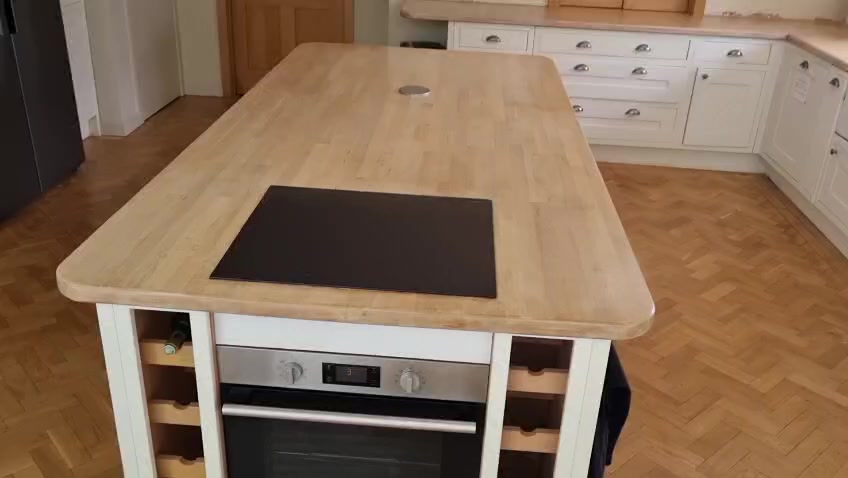
Take a look at the pictures below, and watch the before-and-after videos further down the page, to see this oak kitchen restored to a fresh, food-safe finish.
Before any work began on the worktop itself, we masked up every surrounding surface — cupboard fronts, splashbacks, the sink and surrounding units — so that nothing outside the work area was at risk from stripping chemicals, dust or overspray. With the area protected, we removed the old bead of silicone sealant along the edges and upstands, giving us a clean line to work back to once the new finish was complete.
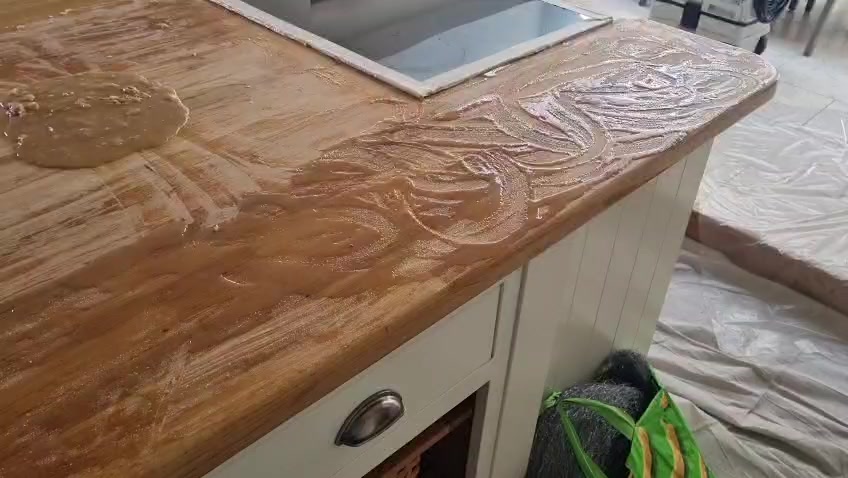
The existing finish was then stripped back and the bare oak neutralised, ready for sanding. We sand using a vacuum-extraction system throughout, which draws dust away at the point of contact rather than letting it settle across the kitchen — keeping the job cleaner and the air clearer while we work.
With the surface sanded back, we bleached the oak to lift out staining and watermarks that had built up over time, then neutralised the bleach fully before moving on. This customer wanted their oak worktops to stay as light and natural-looking as possible, rather than darkening with an amber-toned finish, so rather than a traditional stain we used a primer to hold that pale, fresh colour once lacquered.
Scratches, dents and old screw holes were filled and levelled back flush with the surrounding wood, so the finished surface reads as smooth and unbroken. Once the filling had been sanded true, we applied five coats of bar-top lacquer — a food-safe finish built for exactly this kind of heavy-use surface, giving strong resistance to water, heat and knocks while keeping the worktop safe to prepare food on.
The result is a kitchen worktop that looks bright, even and freshly finished, with the natural pale tone of the oak preserved rather than masked, and a hard-wearing lacquer finish that will stand up to daily kitchen life for years to come.
Photos
Kitchen 1

Kitchen 2

Videos
Kitchen Work Surfaces 1 Before
Kitchen Work Surfaces 1 Finish