French Polished Table 1
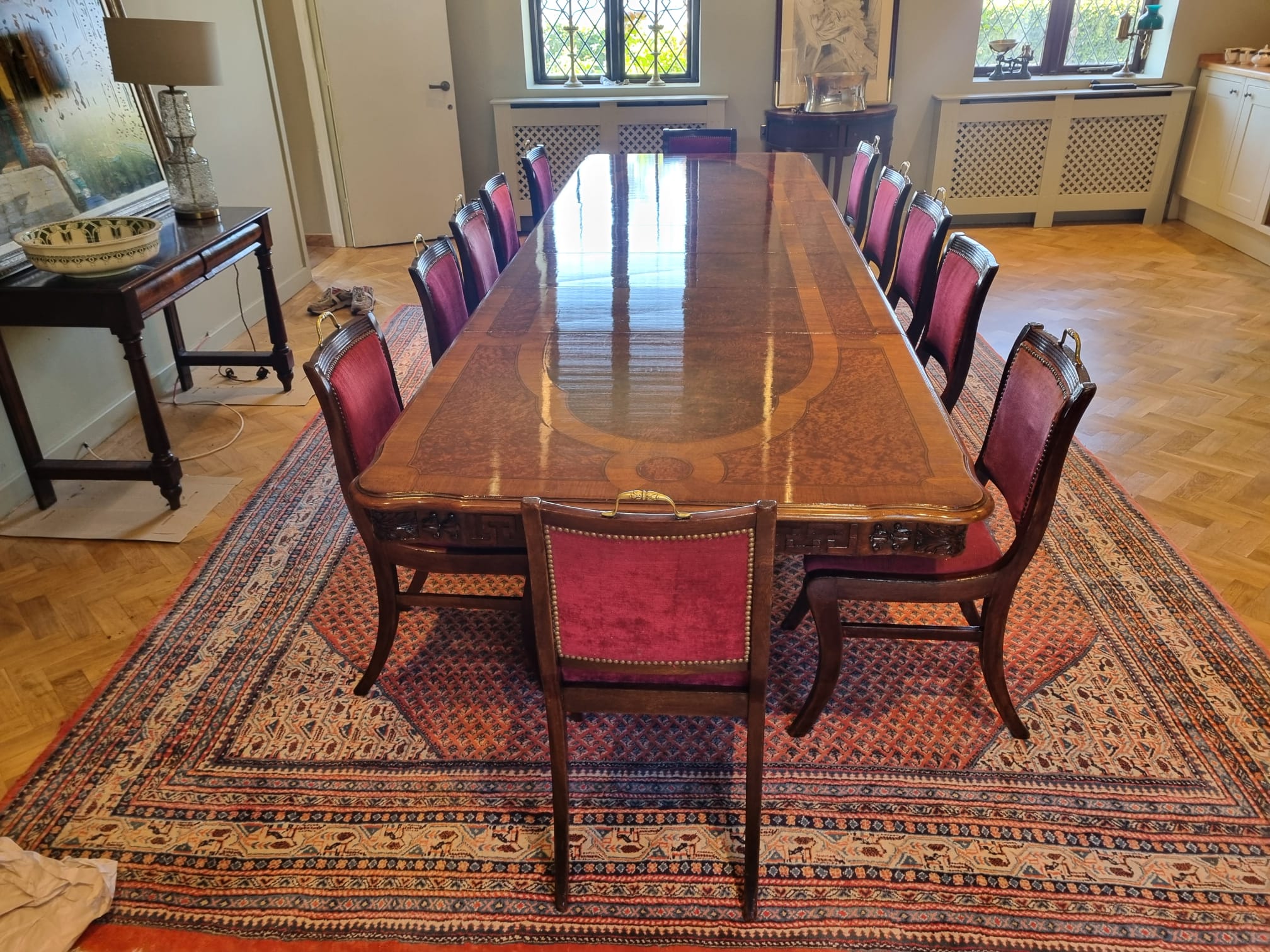
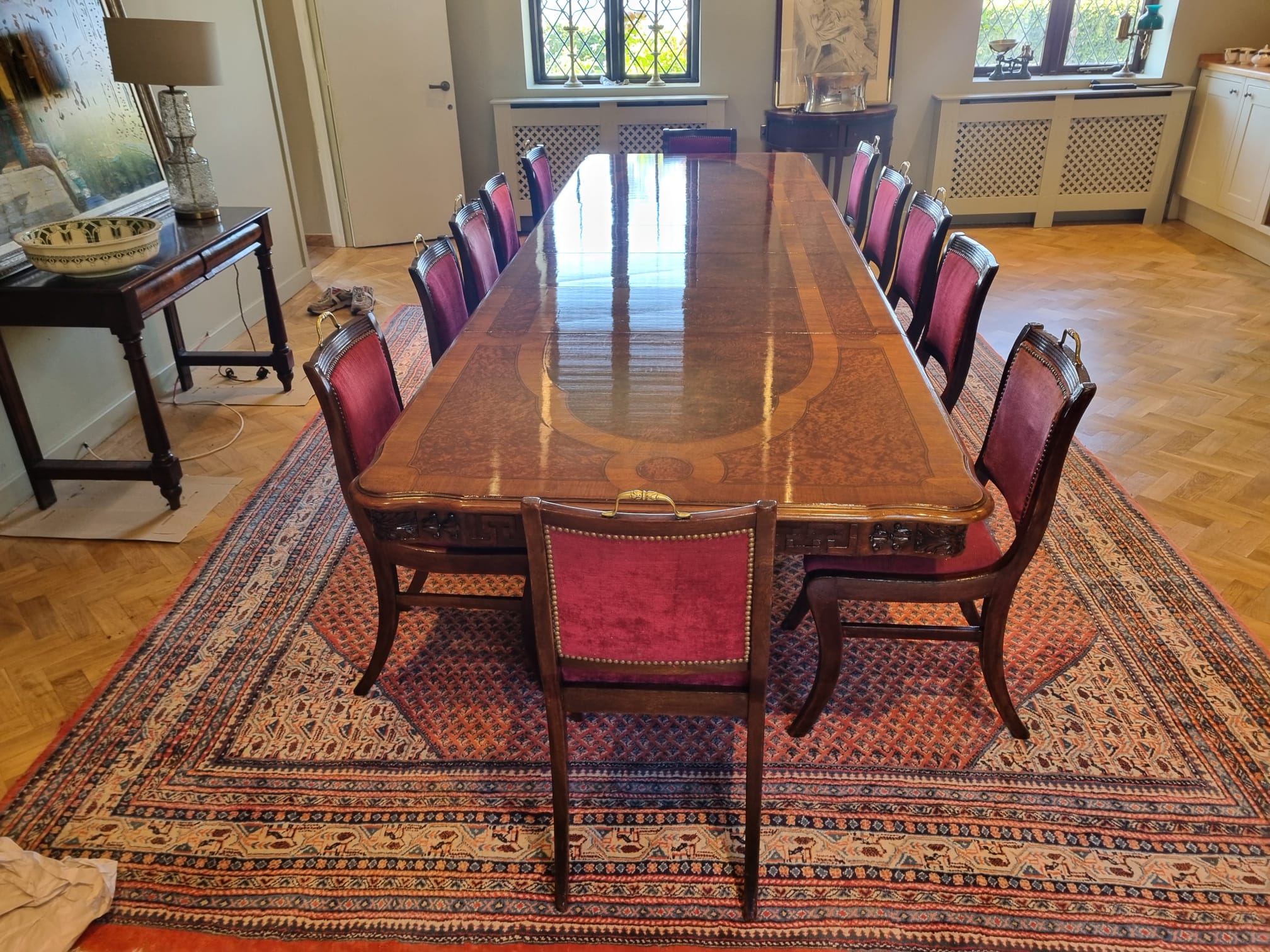
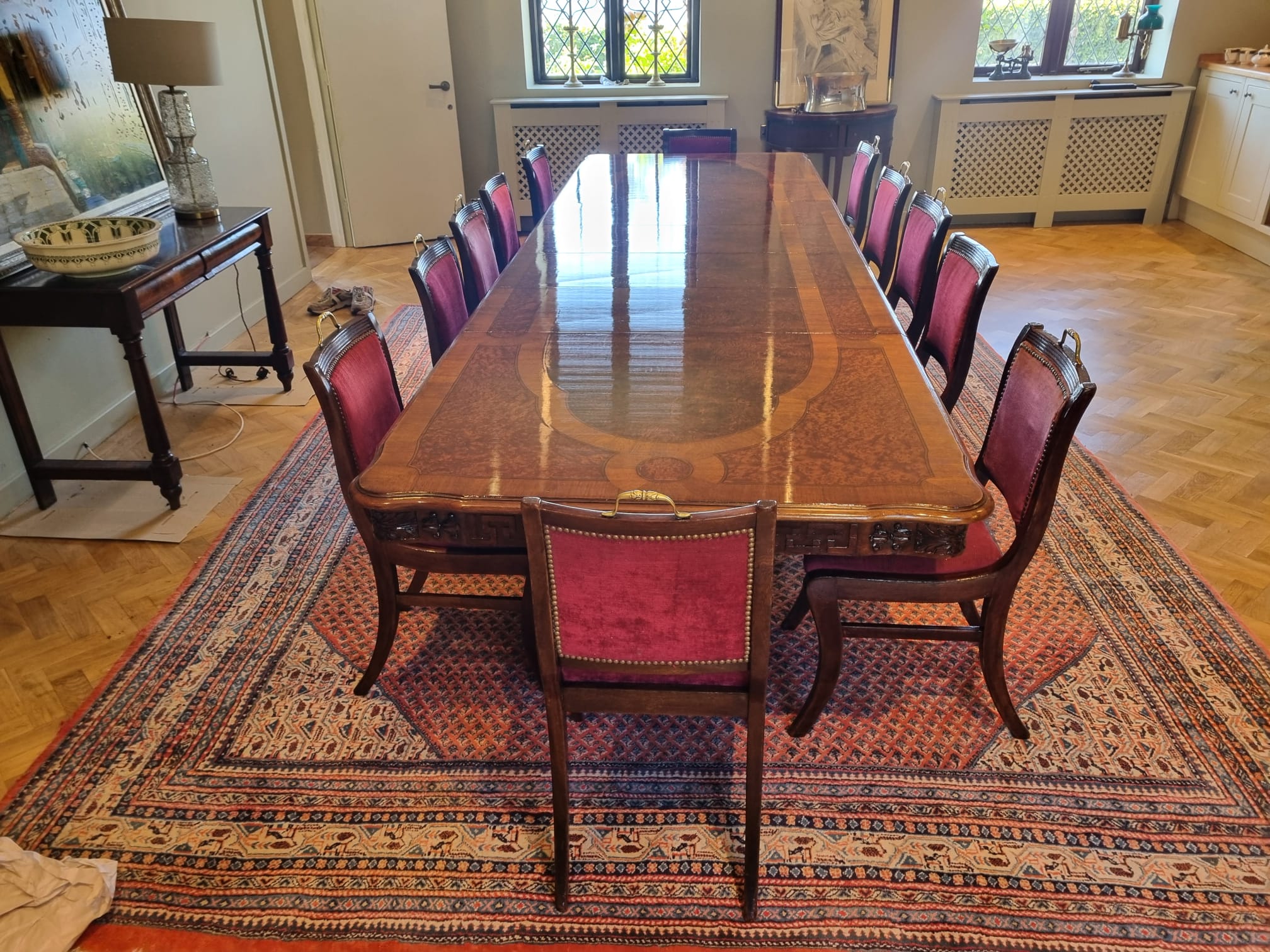
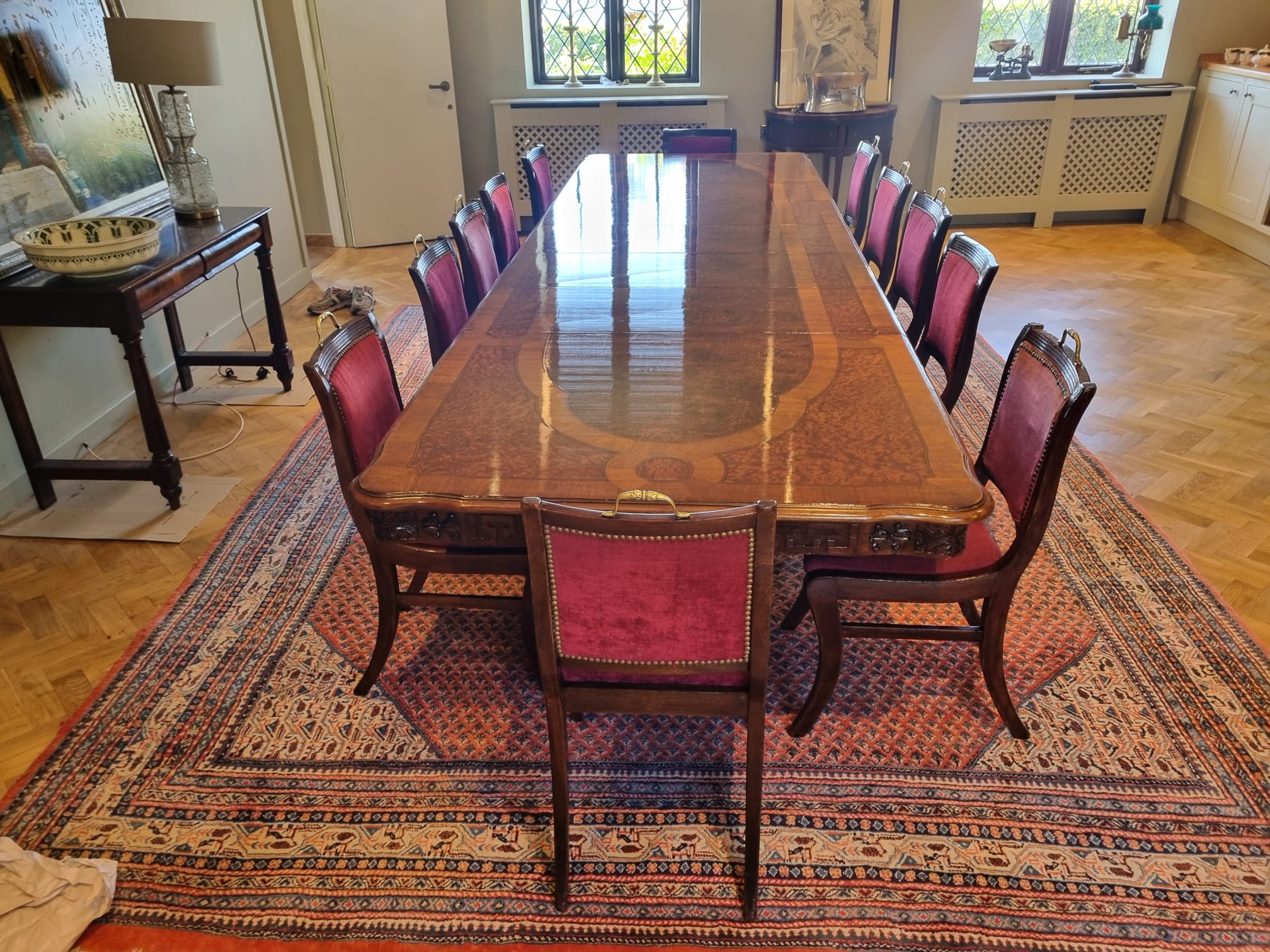
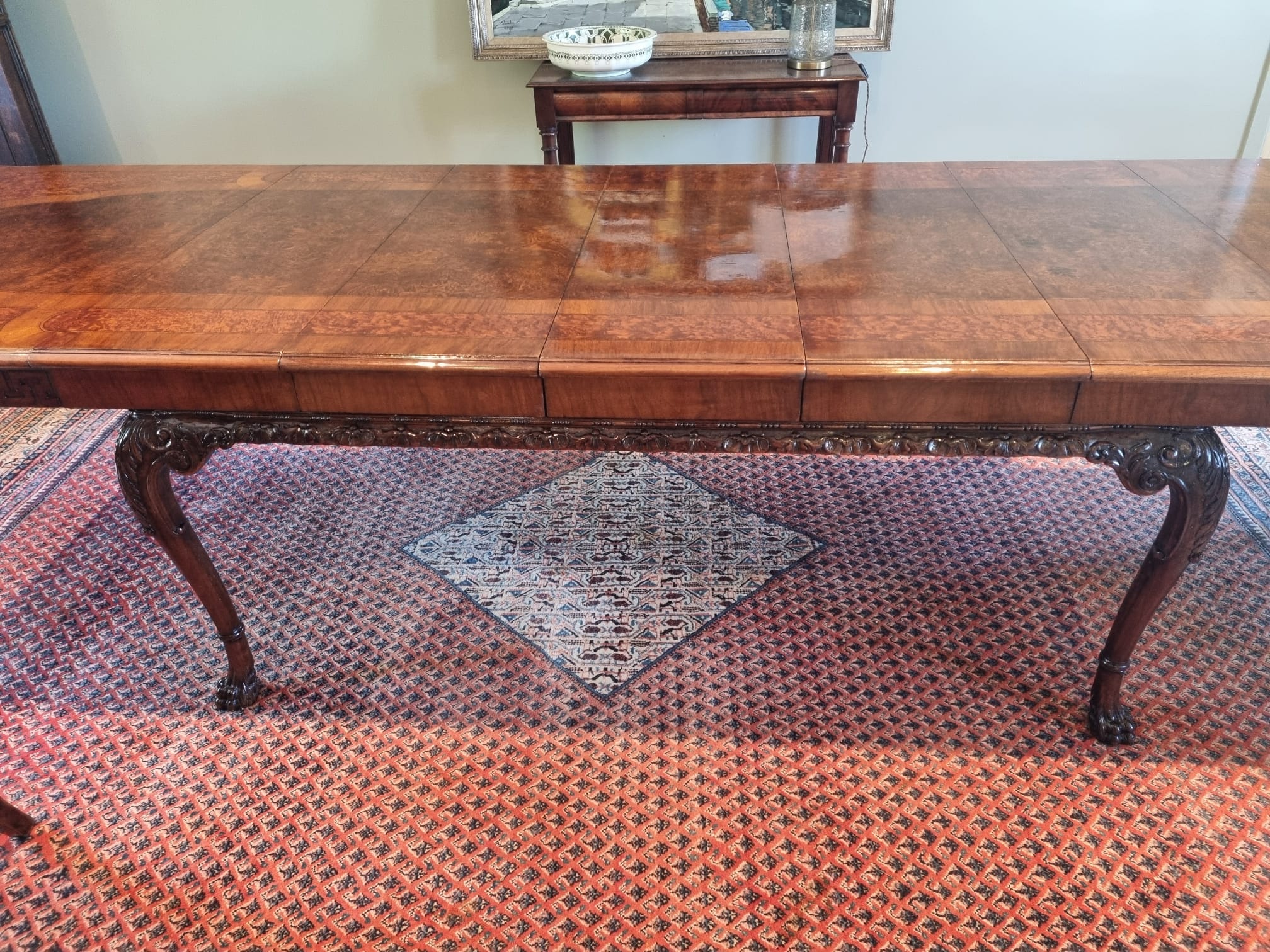
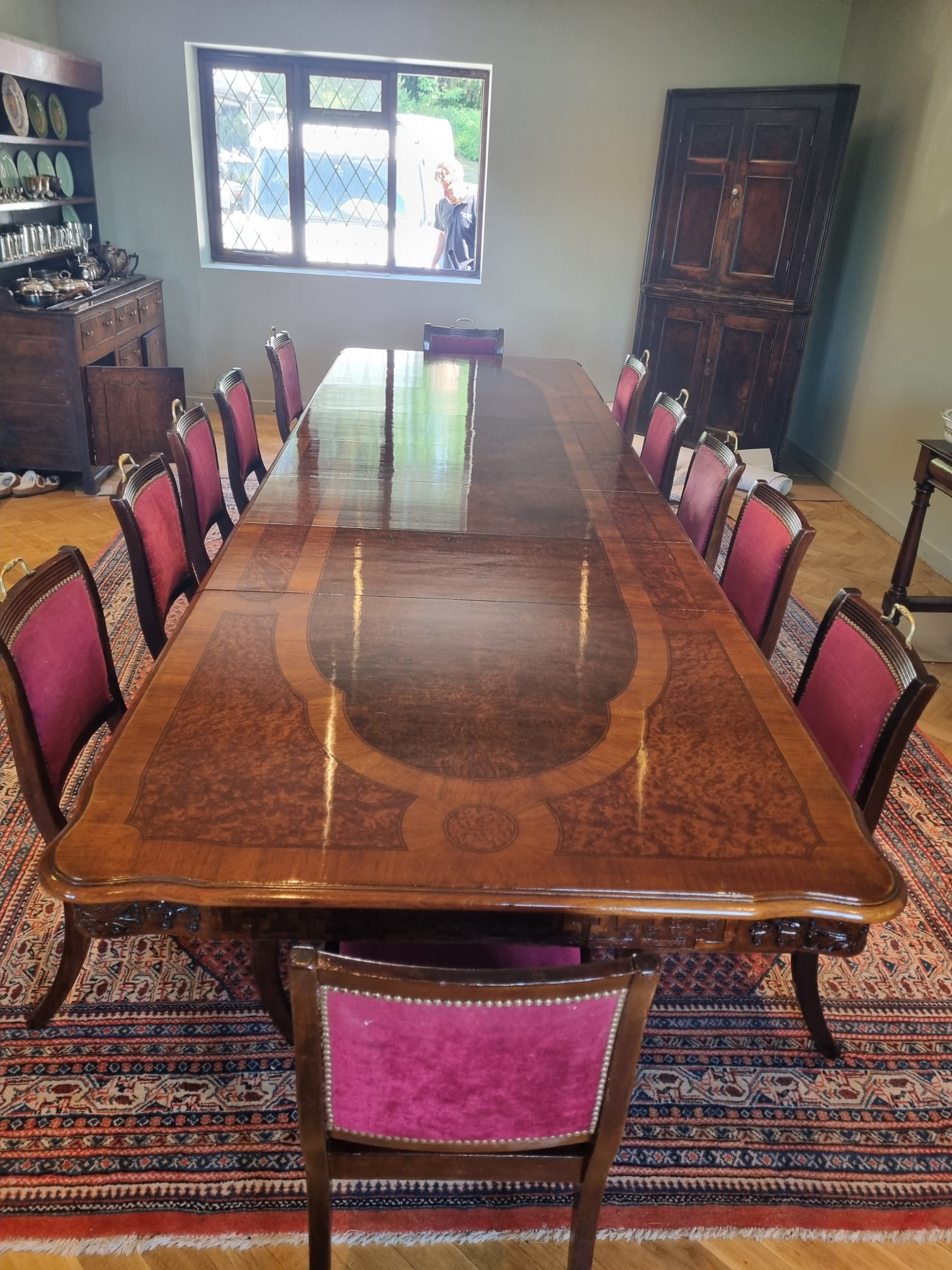
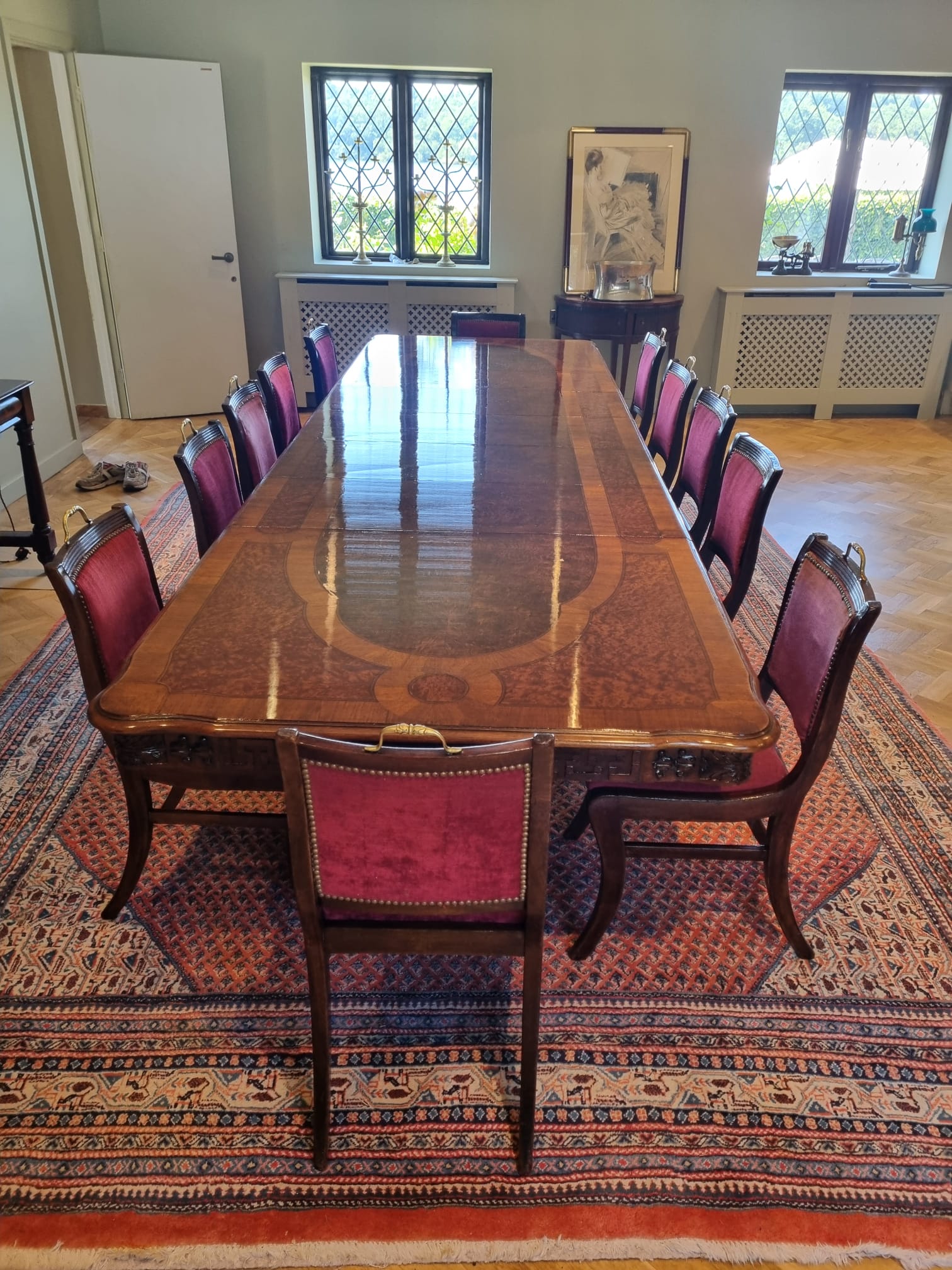
Take a look at the pictures below, and watch the videos further down the page, to see this burr walnut table brought back to life.
This piece arrived with us in very poor condition, with heavy surface damage, chips, scratches and areas of veneer that had lifted and cracked away from the carcass. Restoring a table like this is one of the more demanding jobs we take on, because it isn't finished in solid timber but in burr walnut veneer. Burr veneer is cut from the swirling, knotted growth found in walnut burls, so instead of a grain that runs cleanly in one direction across the surface, the grain here twists and turns constantly, changing direction from one patch to the next, sometimes within a few centimetres. That makes it far harder to polish evenly, because each patch of grain absorbs colour, oils and polish slightly differently to its neighbour. Where a straight-grained top can be polished with a fairly uniform, repeating motion, a burr top demands constant adjustment, working with the grain direction of each individual patch rather than the piece as a whole, to avoid leaving patches that look flat, cloudy or a different shade to the rest of the top.
We began by carrying out veneer repairs, carefully re-lipping and re-laying the sections that had lifted or cracked, before moving on to chip and scratch repair across the table. Colour matching was critical throughout, building up toner and stain in thin layers so the repaired sections blended seamlessly into the surrounding original veneer rather than standing out as obvious patches.
The base of the table had carved detail that had also suffered over the years, with crisp edges softened and lost in places. We repaired the damaged carving by hand, re-defining the lines and undercuts, then colour matched these sections to the rest of the base before French polishing them, taking care with a fine brush so the polish built up gloss without flooding or blurring the definition of the carving.
The finished table now has a deep, even gloss across the whole top and base, with the burr figuring brought back out and the repairs invisible to the eye.
Photos
Videos